
Off-Grid Living
There’s no light switch connected to a national grid at iKhayalamafu. Never has been. And that’s rather the point.
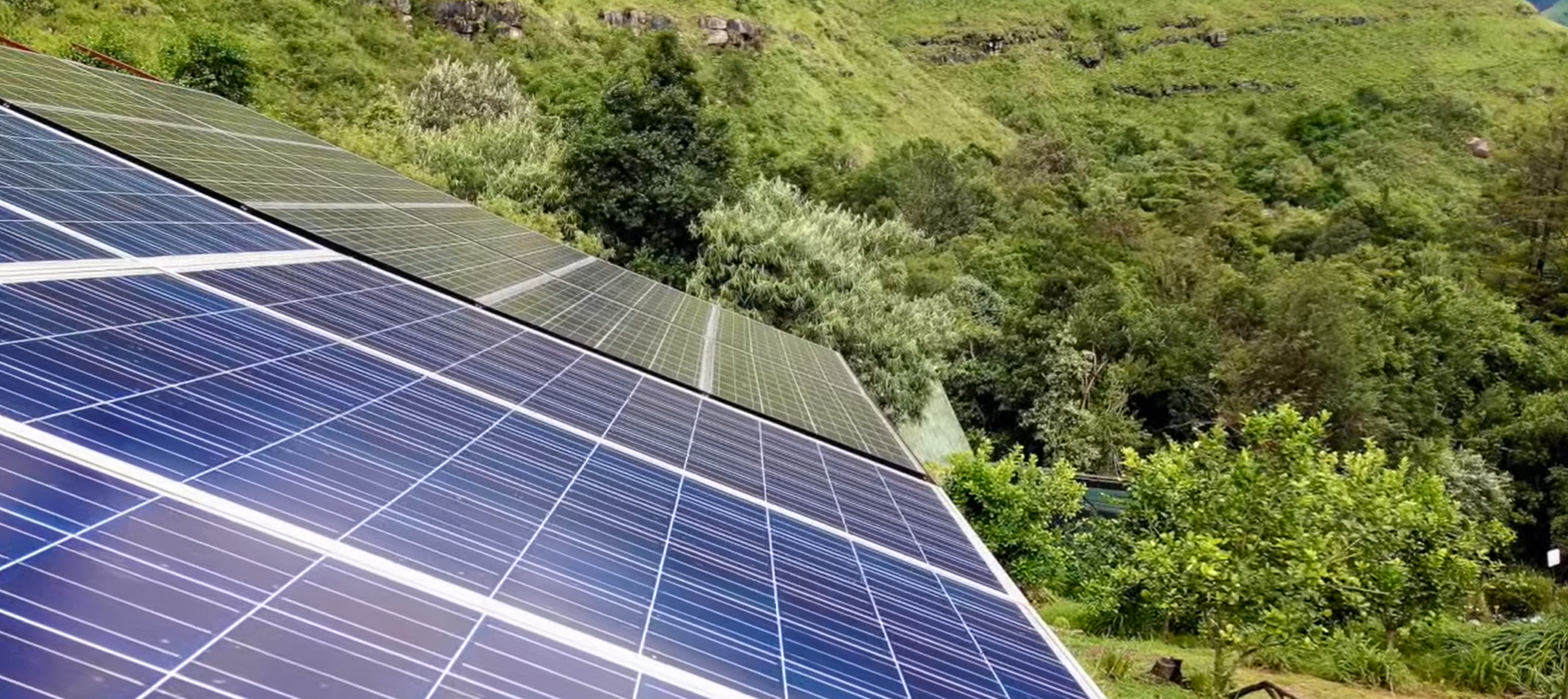
The property runs entirely on its own systems: 5.2kW of solar panels charge a 63kWh battery bank that carries the cabins and main house through the night, with a small generator standing by for the odd cloudy stretch (about ten hours a year, on average). Water arrives by gravity, not by pipe from a municipal line: it rises in perennial streams just above the property in the Drakensberg Park, and reaches the taps filtered and clean minutes after leaving the rock. For most guests, the first evening is the adjustment: no streetlights, no hum of traffic, just the fire, the stars, and a battery bank quietly doing its job.
By the second day, most people stop noticing what’s “missing” and start noticing what’s there instead. Hot water is real and plentiful. Three solar geysers do most of the work, topped up by gas so the temperature never depends on the weather. Cooking happens slower: gas stovetop and braai rather than a bank of electric appliances, which tends to turn dinner into the evening’s main event rather than something squeezed in around it.
Off-grid living at this scale isn’t a hardship story. It’s the reason the valley still looks the way it does. Solar and gravity-fed water mean the reserve’s 95 hectares of indigenous forest stay largely undisturbed, and the vegetable garden, hothouse, and bee-hives keep running the way they always have, mostly on sunlight and gravity.
If you’re the kind of guest who packs a headlamp “just in case”, bring it. You probably won’t need it, but you’ll like knowing it’s there.